The history of Indian music can be divided in to four periods namely
- The Vedic period or the ancient period
- The Hindu period
- The Mohammedan period
- The Modern period
We shall examine each period seperatly.
- The Vedic period or the ancient period
The musical culture of the Indus valley civilization of the third and second millennia B.C. speaks or harps, many types of drums. This civilization died when Aryans came in second B.C. They composed and sung hymns to god. Rig veda, Sama veda and Yajur veda were composed. Sama veda contains songs sung musically and it gave birth to seven notes. Slowly Jati Gayan developed out of vedic music. Vedas describes Brahma as the father of music. Vishnu as and Shiva also studied this art and Saraswathi was the goddess of music. Narada Muni learned it from gods and spreaded it among humans. Bharatha, a sage wrote an important book called Natyashastra, on music and dance sometime between 200BC and 200AD.
2. The Hindu Period
This started with the Gupta king 380 AD a famous poet named Kalidasa was employed in the place of gupta king Vikramaditya. It was the golden age of Culture arts and learning in India. Kalidasa wrote many famous poems like Meghaduta, Raghuramsa and Sakuntala. His works mention many types of veenas like Parivadhini, Vipanchi, Pushkar and drums like Mridanga and Dundubhi, Vamshi or the flute too has been described.
3. The Mohammedan period
In the ninth century Sufis came to India. They were great lovers of Music. The followers of Nizamuddin Chishti (1324AD) included Basant and Rang celebrations in their religious practices. The Moghuls invaded India in the 11th Century. Some muslim rulers like Aurangzeb (1658-1707) prohibited music but rulers like Akbar (1556-1605) liked music and made it popular. In the 12th Century a Persian musician named Ameer Khushroo invented Khayal, Tarana, Ghazal, Khawwali, Tabla and Sitar and also composed many Ragas and Talas.
During this period (1210-1247AD) Sharangadeva wrote the important book Sangeet Rathnakar, which gave a lot of details on Srtuti, Swar, Saptak, Grama, Murchana etc. He also gave the technique of playing and constructing 14 kinds of drums. This book was highly accepted by both Hindustani and Carnatic musicians. In the 14th Century, Alauddin Khilji became emperor and it was he who employeed Ameer khushroo as his royal musician.
In the 15th Century Sultan Hussain Shirki invented Kalavanton ki Khayal. In the 15th Century Akbar became King. He had a great musician called Tansen who performed miracles with music. He produced fire and rain with music. His teacher was a great music yogi called Swami Haridas who was also a great singer. During this period Raja Manisingh Tomar of Gwalior invented the Dhrupad style of singing. In the 16th Century Pandit Vyankhatamukhi wrote Chaturdandi Prakashika which described his 72 melakartas. In the 17th Century Muhammad Shah Rangile became king in whose court were two famous musicians named Adarang and Sadarang. They composed many khayals and popularized the Kathak dance.
4. The Modern period
Pandit Vishnu Narayan Bhatkhande was born in 1860. He is called the ‘Father of Modern Hindustani Classical Music‘. He took 10 Thaats from Vyankhatmukhi’s 72 Melas and grouped all ragas under 12 Thaats. A notation system was invented by him and he also started the Morries College of Music, which later became the Bhatkhande Sangeet Vidyapeet. He also wrote many books and collected many Dhrupads, Khayals, Taranas etc. In Six Kramik Pustakas and published them. He also arranged musical conferences. He declared the the Bilawal Thaat as the Shuddha Thaat.
Pandit Vishnu Digambar Palushkar (1872-1931AD) also started the Ghandharwa Maha Vidyalaya in 1901 to popularize music and made many distinguished pupils like Pandit Omkarnath Takur, Vinayakrav Patawardhan, Narayan Rav Vyas. He also wrote many useful boooks on music and invented a notation system.
With the invasion of the British, North Indian music started going down. The vocal and instrumental Gharanas dispersed with the coming of the Radio, Televisions and the Tape recorder. Guru-Shishya Parampara came to an end. University-School musical education became popular. In Calcutta Gurudev Ravindranath Tagore established the Vishwa Bharathi Sangeet University in Shanthi nikethan and with the Institution of the Bhatkhande Sangeet Vidyapeet of Lucknow. North Indian music spreaded all over the world with great ambassadors like Pandit Ravi Shankar, Ustad Alauddin Khan, Zakhir Hussain Allah Rakha and Pandit Hari Prasad Chourasiya etc. Who performed all over the world. The Indian music spreaded to the four corners of the world. As the film music developed with great music directors like Naushad, Anil Biswas, Shankar etc and with the singing of Lata, Rafi, Mukesh, MannaDey etc. Film music too became more popular. With the advent of television and radio stations, North Indian Classical Music reached the homes of the people.
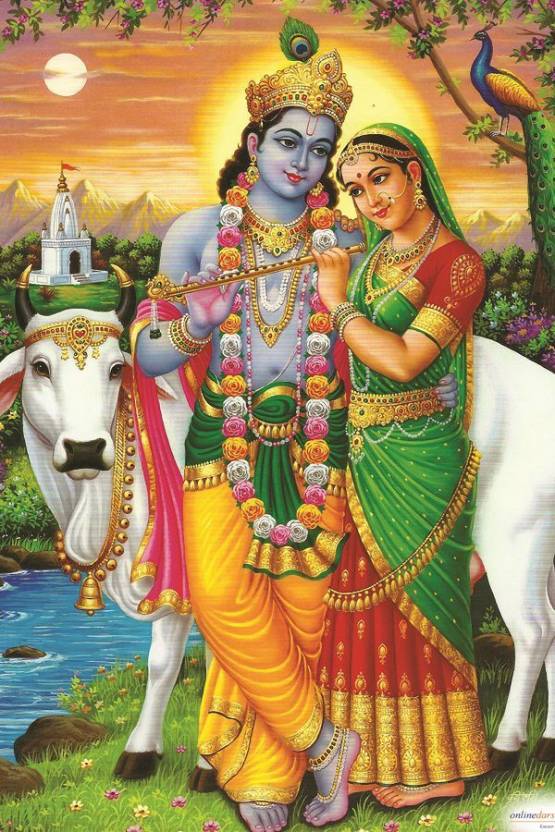
Krishna & Radha enjoying the flute 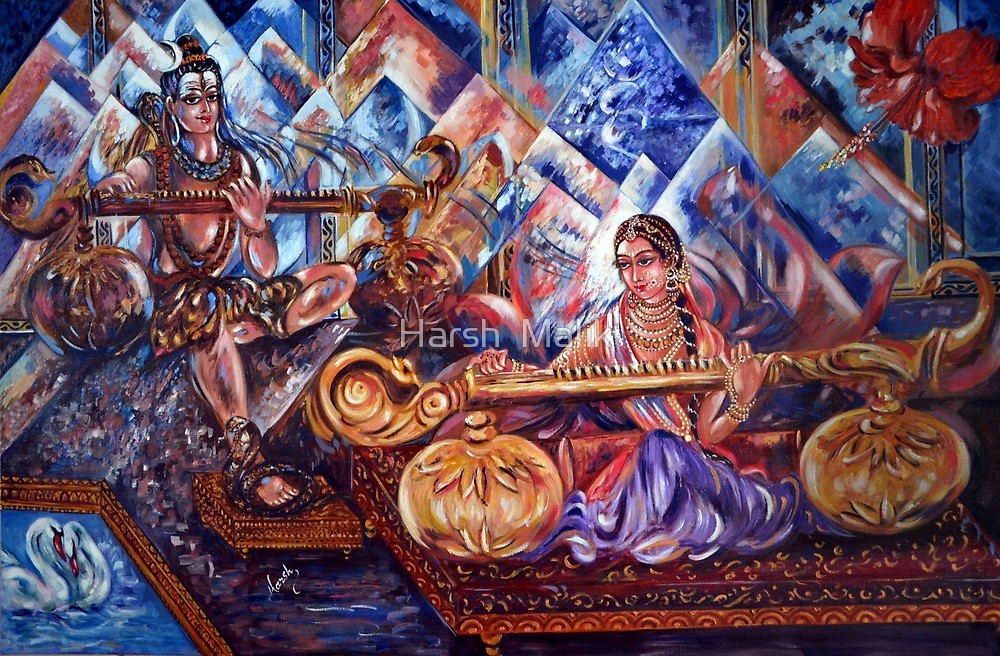
Shiv & Parvati playing the Rudraveena 
According to a Shloka given in Sangeet Ratnakara by Pandit Sarangadeva, Music is defined as the combination of Vocal music, Instrumental music & Dance 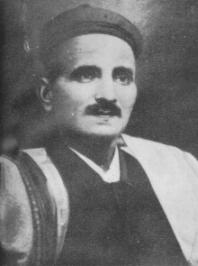
Pandit Vishnu Narayan Bhatkhande 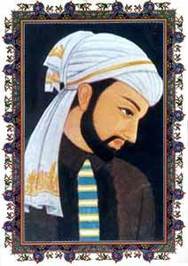
Ameer Khushroo 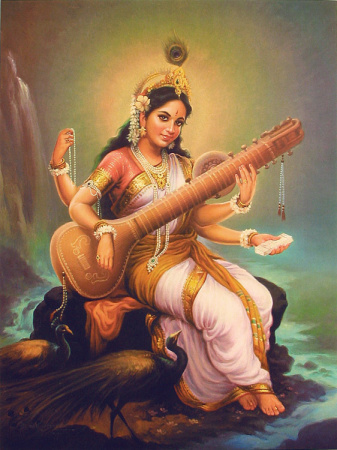
Goddess Saraswati 
According to a view, sage Narada had been engaged in rigourous meditation for a long period over which Lord Shiva had been quite pleased and accordingly he had presented the art of music to sage Narada.
 SWAR
SWAR 